



Few figures have shaped the self-help industry as visibly—and as controversially—as Tony Robbins. For almost fifty years, Robbins has been a headline name in personal development, famous for turning motivation into a stadium-scale experience and for teaching an action-first philosophy of change. To his fans, he’s a catalyst who helps people rewrite their lives. To his critics, he’s a symbol of the excesses and risks of commercialized self-improvement. Either way, Robbins has become one of the clearest architects of what modern self-mastery looks like in popular culture.
TL;DR:
Tony Robbins is a hugely influential motivational speaker and self-help entrepreneur who helped shape modern “self-mastery” culture. Rising from a tough childhood, he built a global empire through bestselling books and massive seminars like Unleash the Power Within and Date With Destiny, teaching that changing your emotional state, beliefs, and habits leads to life breakthroughs. He’s also a major businessman and philanthropist. But his legacy is complicated by criticism of high-pressure seminar tactics and public allegations of sexual misconduct, which he denies. Overall, he’s a key architect of modern personal development—both celebrated and controversial.
From restless beginnings to a calling


Tony Robbins (born Anthony J. Mahavoric on February 29, 1960) grew up in North Hollywood, California, in a household he has described as financially unstable and emotionally turbulent. As a teenager, he encountered motivational speaker Jim Rohn, began promoting Rohn’s seminars, and soon absorbed the core principle that people can reshape their lives by reshaping their beliefs and habits.
By the late 1970s and early 1980s, Robbins had begun fusing Rohn’s influence with Neuro-Linguistic Programming (NLP), behavioral psychology, and a performer’s sense of timing. The result was a distinctive style: rapid delivery, physical movement, emotional intensity, and an insistence that change must be immediate and embodied—not just understood. That signature energy became his brand.
The philosophy: self-mastery through “state,” belief, and action

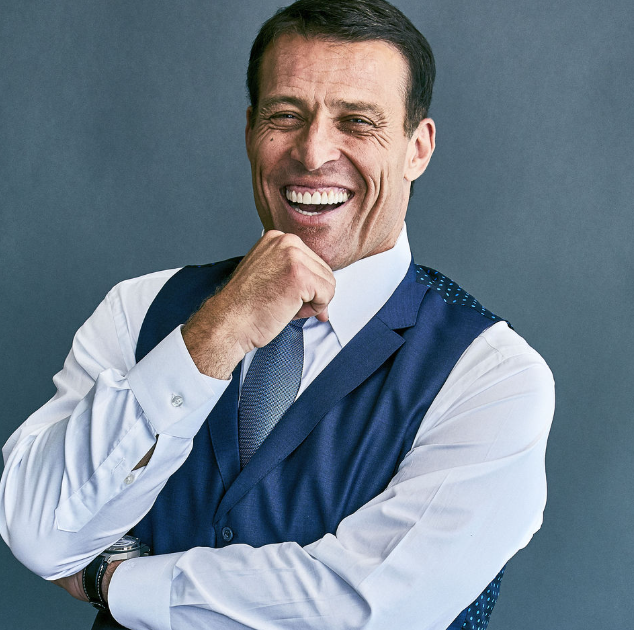
Robbins’ approach is built around a few recurring ideas, repeated across his talks, programs, and books:
- Emotion follows physiology. If you change your posture, breath, movement, and focus, you can change your emotional “state,” and your state drives your choices.
- Beliefs are the real limits. People act in line with what they think is possible; changing beliefs changes behavior.
- Clarity + massive action. Decide what you want, link it to strong reasons, and take relentless steps.
- Pain/pleasure conditioning. Humans move away from pain and toward pleasure; lasting change happens when the pain of staying the same outweighs the pain of changing.
Supporters find this empowering and practical. Critics argue it can oversimplify mental health, trauma, or structural problems, but even critics acknowledge its influence in making psychology feel actionable to a mass audience.
Books that expanded a movement

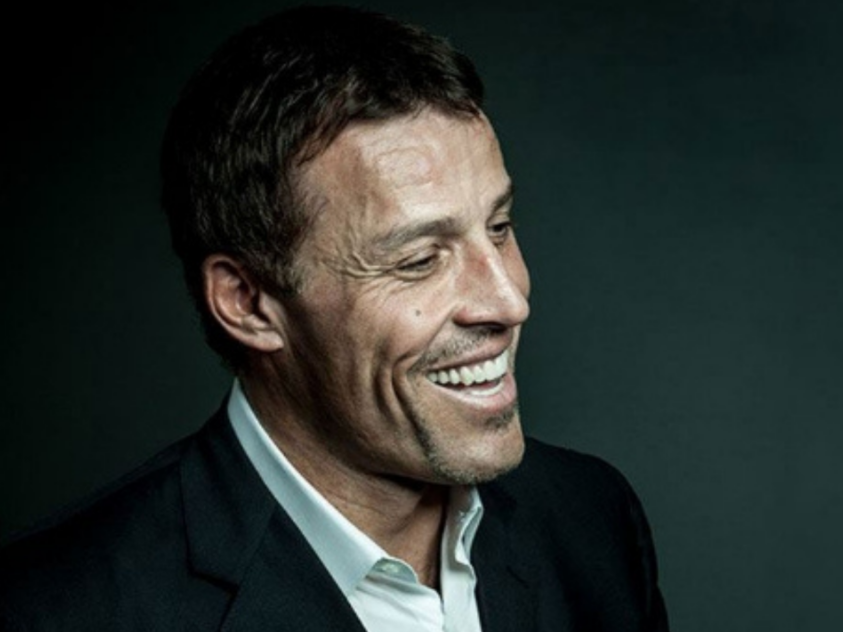
Robbins’ reputation exploded through bestselling books that became staples of self-help shelves:
- Unlimited Power (1986)
- Awaken the Giant Within (1991)
- Giant Steps (1994)
In the 2010s, he pivoted strongly into personal finance and longevity topics with:
- Money: Master the Game (2014)
- Unshakeable (2017)
- Life Force (2022)
Even across different topics, the formula stays constant: emotional leverage, clear frameworks, and a push for decisive action.
Seminars as theater, therapy, and turning point
If books built the blueprint, seminars built the empire. Robbins is best known for mega-events like:
- Unleash the Power Within (UPW) — a multi-day, high-intensity seminar structured around breaking fear patterns, including the iconic firewalk.
- Date With Destiny — a longer immersive experience focused on identity, relationships, values, and long-term life direction.
These events blend crowd energy with emotional interventions—participants cry, shout, confront fears, and commit publicly to change. The Netflix documentary Tony Robbins: I Am Not Your Guru (2016) offered a behind-the-scenes look at Date With Destiny and helped globalize his image for a new generation.
The seminars are why the title fits: Robbins didn’t just teach self-mastery. He engineered a modern ritual for it, scaling what used to be private coaching into arena-level experiences.
Business builder, not only a speaker
Robbins has consistently presented himself as an entrepreneur alongside his coaching role. He operates coaching and consulting through Robbins Research International, and is widely reported to invest in multiple businesses. Public profiles note his ownership stakes in ventures including sports and esports organizations.
This business dimension reinforces his positioning as a strategist for high performance—someone who teaches outcomes while also modeling a high-growth career.
Philanthropy as part of the message
Another pillar of Robbins’ public identity is giving. Through his foundation and partner nonprofits, he supports hunger relief, youth programs, and other initiatives. He frequently repeats that fulfillment comes from contribution, encapsulated in his well-known line: “the secret to living is giving.”
For followers, this strengthens his credibility: self-mastery isn’t only about personal success, but about using success to help others.
The controversies that complicate the legacy
Robbins’ influence comes with a long shadow of criticism. In 2019, investigative reporting publicized allegations from multiple women accusing him of sexual misconduct and inappropriate behavior over decades. Robbins has denied wrongdoing, and subsequent coverage tracked legal actions related to the reporting.
Other criticisms include:
- High-pressure seminar dynamics. Some former attendees and observers argue the emotional intensity can be manipulative or unsafe for vulnerable people, while supporters say the intensity is precisely what produces breakthroughs.
- Commercial scale. Robbins’ high-ticket programs are seen by critics as proof of self-help commodification; supporters see them as premium coaching ecosystems.
These debates don’t erase the impact, but they do mean that any honest portrait of Robbins must include both transformation stories and serious concerns.
Why he remains an architect of self-mastery
Even with controversy, Robbins’ cultural footprint is huge. He helped define:
- the modern “coach-as-celebrity” model,
- arena-scale motivation as mainstream entertainment,
- and the lnguage of mindset, identity, and peak performance that dominates today’s personal development industry.
His real innovation wasn’t inventing self-help. It was industrializing it—designing systems, events, and media that turned inner change into a global product people could experience together.
Conclusion
Calling Tony Robbins “The High-Energy Architect of Modern Self-Mastery” captures what he has actually done: he took performance psychology, motivational teaching, and behavioral tools, then built a worldwide stage on which millions pursue personal change. His methods have inspired deep loyalty, while his controversies demand careful scrutiny. The story of Robbins is ultimately the story of modern self-help itself—its power to transform, its potential to exploit, and its lasting influence on how people imagine becoming better versions of themselves.